What street photography is to me (and isn’t)
I wouldn’t call myself a street photographer. I wouldn’t even call myself a photographer at all. I rather call myself a photography enthusiast that is interested in documenting humanity, peoples interaction and behaviour.
It took me a while to realise that the type of photography I am mostly interested in is referred to as street photography. I started shooting pictures with a digital SLR (Canon EOS Rebel XT or also called 350D) in 2005 and first of all had to deal with aperture, shutter speed, ISO and all the other technicalities of a camera. I was shooting as often as I could while traveling, taking pictures of people in general and also quite a lot of animals in the Cologne Zoo. Over time I discovered that most of the pictures I took were dull, boring and not worth printing or even keeping them on a hard drive. I then made the typical mistake and blamed the camera for my discontent and invested in a more sophisticated model (Canon EOS 7D). My feelings did not change, the pictures were still boring except for those shots of people, especially strangers, that did not take notice of me and my camera. I felt that this were honest pictures, a neutral depiction of unaware subjects, their expressions and interactions in a short moment of time. It still took me a couple of years to realise this and re-enjoy my hobby the way I am doing again now.
In 2017 I switched from a 75mm full-frame equivalent to a 35mm prime lens, meaning I need to get closer to the people I like to document. It will take some time to get comfortable shooting with the much shorter focal length as I won’t go unnoticed now. Therefore, I would like to share my experiences and all my trial and error on this blog.
Most probably there is no need for another definition of the term street photography. To me it is still useful to define it now and have a look if and how I will change my personal view on this definition over time.
What is street photography?
According to Wikipedia street photography, “also sometimes called candid photography, is photography conducted for art or enquiry that features unmediated chance encounters and random incidents within public places.” Despite the looks this is not a narrow definition but gives a basis for discussions all over the internet. There is not one but many definitions of street photography. Streethunters, Peta Pixel, iN-PUBLiC, Eric Kim and many more published their views on this topic and most of them overlap. And this does not even include one of the many books that have been written on this topic. I find especially the article by openly “critisised” Eric Kim from 2013 – the time before the critique – quite interesting. He made some points that I consent to and compared street photography to music genres with many sub-genres, e.g. candid street photography versus street portraits versus urban landscapes.
What is street photography to me?
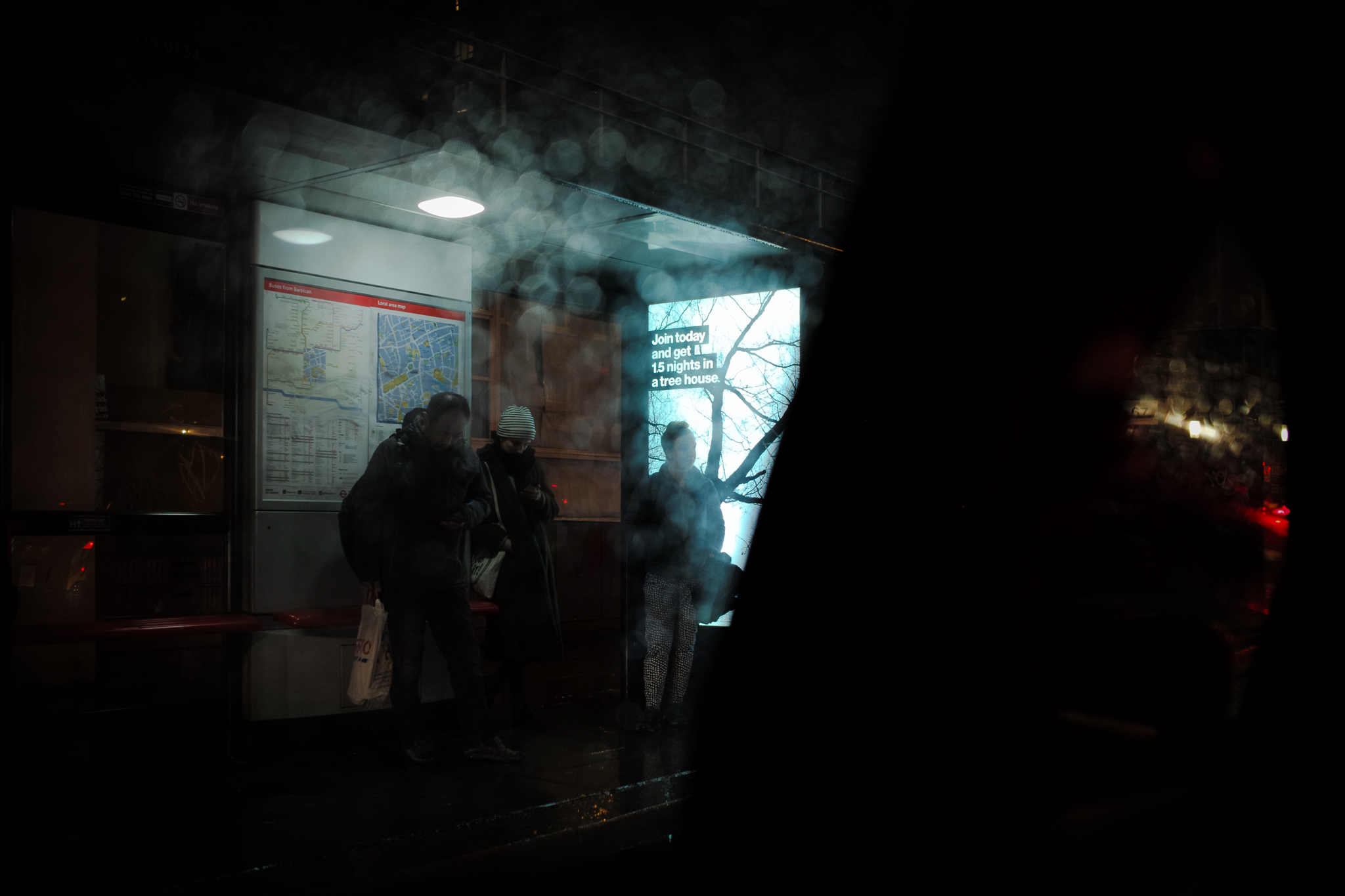
I define street photography by how and where I am most likely to take pictures. I describe it as any kind of photography that is taken in any space that is generally open and accessible to people, either indoors or outdoors. Subject of this kind of photography does not necessary have to be people, but – as also David Gibson describes in his book “The street photographer’s manual” – evidence of people. One part that I feel is crucial to street photography is that any type of encounter is never set-up nor staged in any way. A photograph that was taken in a candid approach makes it more honest, authentic and at least to me more interesting. This may still mean that someone notices the camera but the shot is not mediated. That’s also the reason why I haven’t taken any street portraits yet – despite the advice of many great street photographers to use it as a practice. Maybe at some point I will make use of this advice and adjust my categories accordingly.
The probably most essential point to me is that I do not want to digitally manipulate my shots. I try to avoid cropping and straightening as far as possible. This means that my post-processing normally only consists of selecting the best shots and organising them in my Adobe Lightroom database. Of course with some pictures it is not always possible to stick to this strict approach.
What street photography isn’t to me!
By pointing out what street photography is to me I already described implicitly what it isn’t: any portrait where the subject consents to being photographed is already staged and falls into the category of a street portrait. Also the extensive digital post-processing and manipulation of pictures (adjustment of colours, contrast, white balance, saturation) that massively changes the nature of the original picture is something, that I would not call street photography any more. I don’t want to be strict on this, a slight adjustment to correct an underexposed picture is nothing to blame. But if the overall character of the picture massively changes due to the adjustment, that is something that should fit into another category.
A quite famous German sports and fashion model with an interest in photography always states that he is doing street photography. Me and many others would probably argue that this is not correct. Looking at his portfolio someone would recognise that each and every picture taken – despite being taken out on the street – is staged and would at least fall into the category street portrait. As he is trying to promote his own brand and fashion label I would even go as far as calling it fashion shots.
How I categorise my pictures on this blog
I like to keep things simple. As you will probably have recognised already my website is only made of two pages: Gallery and Blog (plus the usual boring but legally required stuff as Imprint and Privacy Policy). Of course I will focus mostly on the gallery and upload my favourite pictures there. But my intention is to regularly write – hopefully interesting – articles on whatever topic is currently on my mind. And with article I don’t mean any type of self-marketing “10 things to improve your photography – only 19,99 EUR” advice.
So how do I categorise my pictures while trying to keep things simple? I currently have a total of six broadly defined categories, that could possible extent or change over time.
- City: exteriour or interiour of a city without people, everything related to urban living
- Macro: extreme close-ups of whatever I come by
- Nature: nature, animals or landscape without people, everything related to rural living
- Still life: any kind of inanimate objects I find odd
- Street: photographs that mainly fall into my definition of street photography
- Travel: photographs with focus on culture, customs and history while traveling
Of course with some pictures it still is tricky how to categorise them as it could fall in more than just one category. Additionally I tag these pictures that I have taken in black & white. Each picture contains information on the caption and possibly also if the picture was cropped or somehow adjusted.